Philips HearLink at G-Sound
G-Sound is an authorized marketer of Philips hearing aids. Philips HearLink is the first brand we present, on our Hebrew site and here in English, with Oticon alongside it. If you have just arrived in Israel, are helping a parent from abroad, or simply prefer to talk things through in English, this page explains what the HearLink 50 family includes and how a decision is usually made.
Everything below about the devices comes from Philips’ own product pages and user documents, listed under Sources. Model details, colours and availability are confirmed individually when you speak with us.
Two styles, both rechargeable
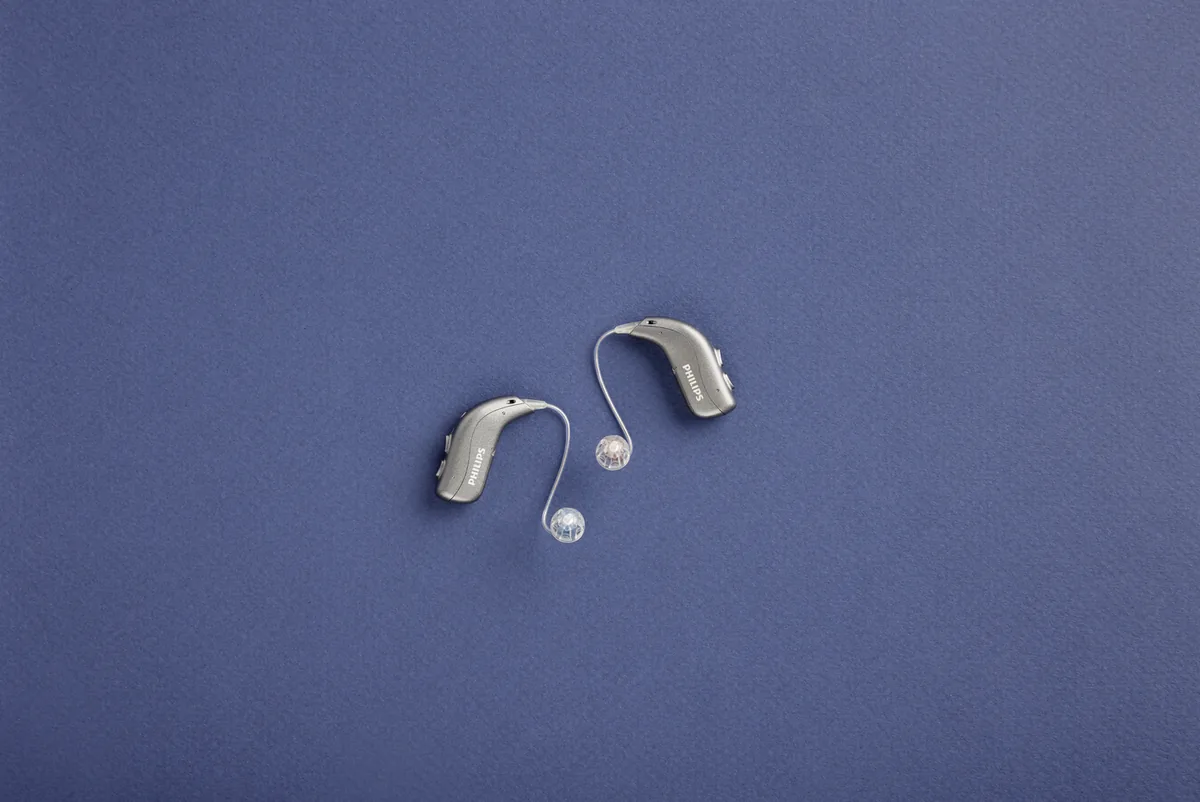
HearLink 50 miniRITE R
The body sits behind the ear and a small speaker sits in the ear canal (receiver in canal). Philips lists a built-in lithium-ion rechargeable battery and a telecoil.
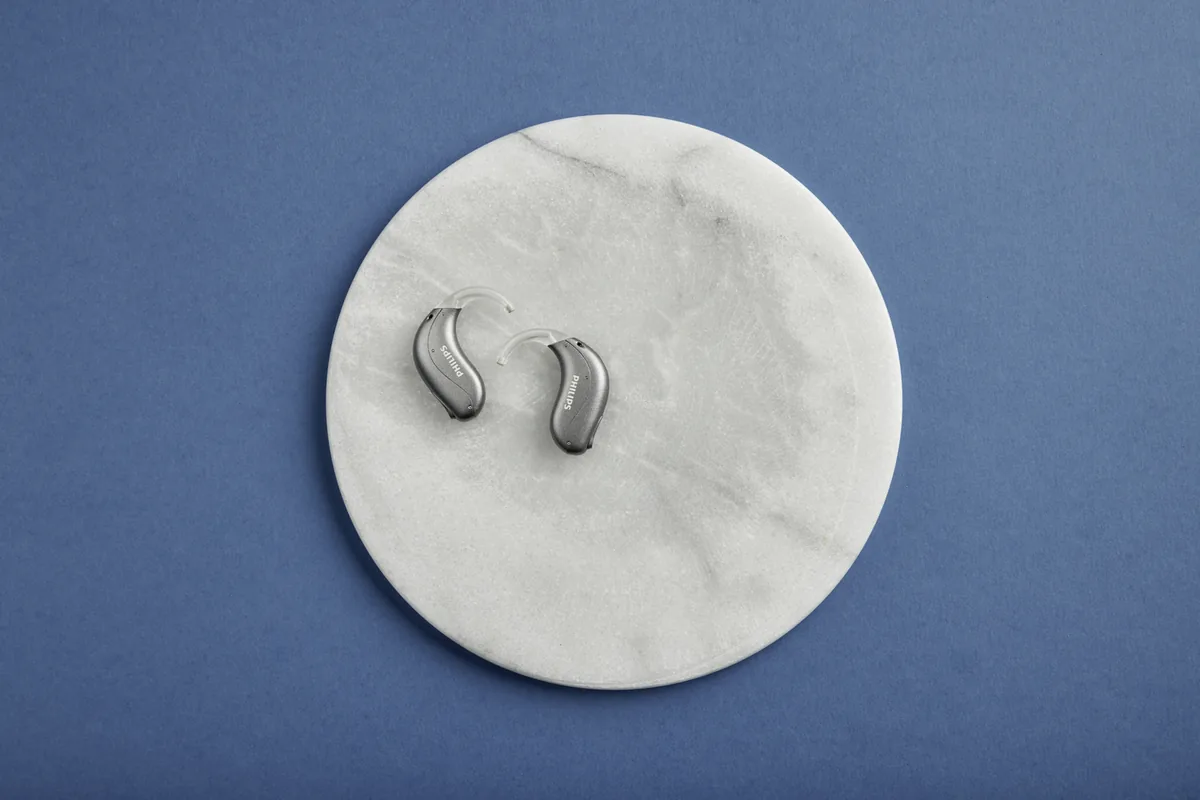
HearLink 50 miniBTE R
A behind-the-ear style in which sound travels through a hook or a thin tube. Philips lists lithium-ion contact charging and a telecoil.
Both styles sit behind the ear. The practical difference is how sound reaches the ear canal: through a wire and speaker in the canal, or through a hook or thin tube. Ear shape, the degree of hearing loss, dexterity and what you find comfortable all play a part. For a general explanation of styles, read hearing aid types explained.
Four technology levels: 9050, 7050, 5050 and 3050
Philips documents the HearLink 50 styles at four levels. On the outside they look much the same; the difference lies in the sound processing inside. In the way G-Sound presents the range, 9050 is the highest of the four levels, 7050 the advanced level, 5050 the mid level and 3050 the entry level of the series.
A higher level is not automatically the right one. If most of your day is spent at home, in one-to-one conversation and in front of the TV, the difference between levels may matter less than if you spend your week in restaurants, family gatherings, meetings or lectures. Our guide to hearing aid technology levels explains how to think about this before you choose.
Phone, app and accessories
For both styles, Philips lists Bluetooth connectivity and the Philips HearLink 2 app. For the miniRITE R, Philips lists Bluetooth LE Audio, Made for iPhone and ASHA streaming for Android, with hands-free calls on selected devices. For the miniBTE R, Philips also lists Auracast broadcast reception. Whether your own phone works the way you expect depends on the phone model and its software, so we check your exact phone rather than assume.

Charger and Charger Plus
Philips lists a desk charger and a portable Charger Plus with a built-in power bank for HearLink 50 styles.

TV Adapter
Philips describes it as a way to hear the TV sound directly in your hearing aids.
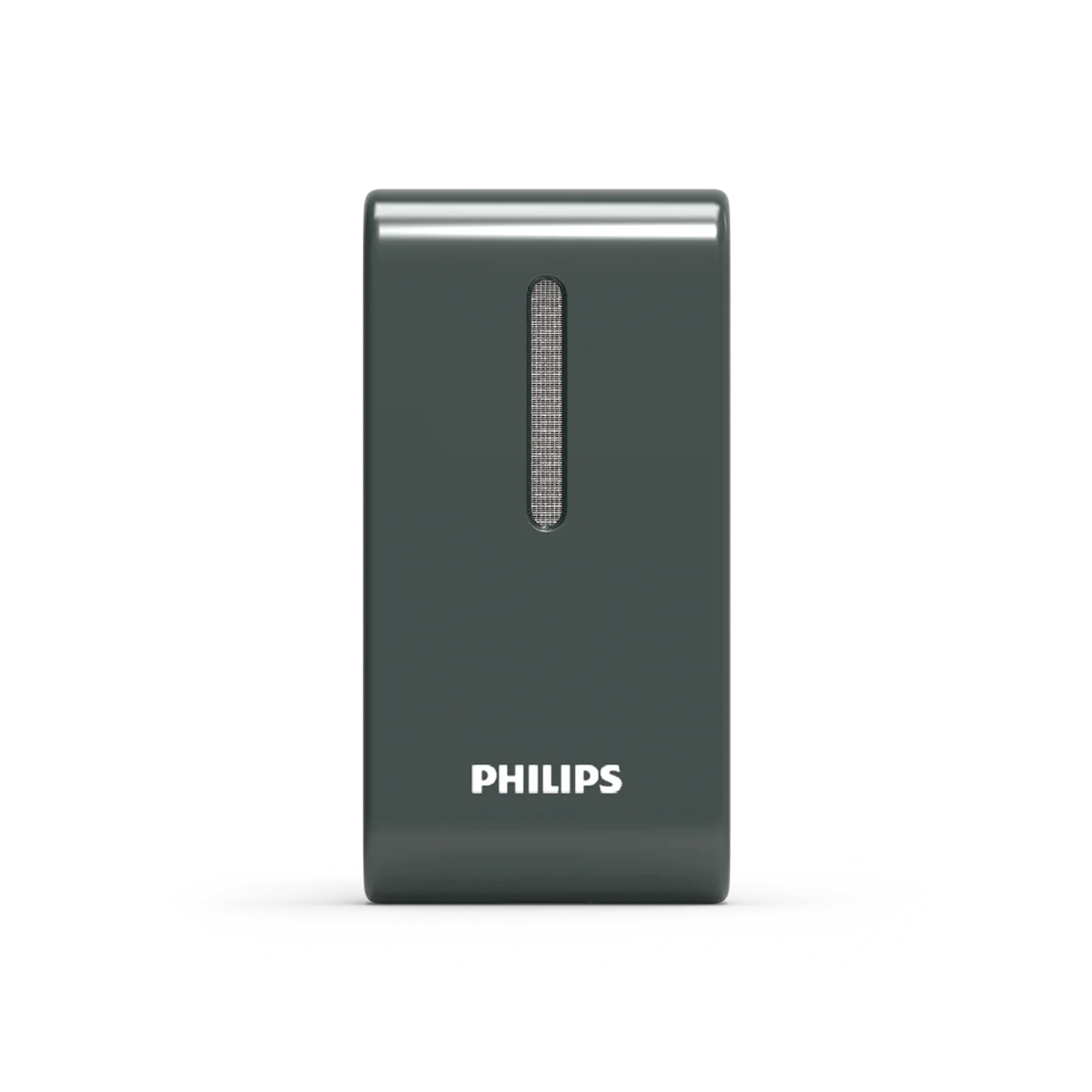
AudioClip
Philips describes a remote microphone that can be clipped on another person, also used for hands-free calls.
Philips also lists a Remote Control and the Easy LE Adapter, which connects Android devices without LE Audio to LE Audio hearing aids. Compatibility is checked for each model before anything is ordered. See accessories and connectivity and Bluetooth hearing aids.
Who usually asks us about HearLink in English
- New immigrants who wore hearing aids before the move and want to understand their options in Israel.
- People who already own Philips hearing aids bought abroad and need help with use, the app or accessories. Bring the exact model name.
- Adult children abroad arranging a hearing-aid conversation for a parent in Israel, with the parent’s agreement.
Practical background for each group is in hearing aids bought abroad and arranging hearing care from abroad.
Support after the fitting
G-Sound provides first-line customer support for Philips hearing aids, including help with device use, app connectivity, cleaning, wax filters, accessories and basic troubleshooting. When a repair requires manufacturer laboratory service, the device is routed to Philips’s separate authorized laboratory.
Many everyday questions are about small things: a blocked wax filter, a dome that needs changing, an app that lost its connection. Our guides on domes and wax filters, hearing aid maintenance and what to check when a hearing aid is not working cover the first steps.
How the decision is usually made
- A conversation about where hearing is hard for you, and any existing hearing test.
- A current hearing assessment if you do not have one.
- A look at the two styles and the four levels against your needs, phone and handling.
- Fitting, programming and follow-up adjustments over the first weeks.
Comparing brands? Read Philips or Oticon: how to choose, or see the Oticon hearing aids page.
Sources
- Philips HearLink 50 miniRITE — Philips Hearing Solutions — accessed 22 October 2026
- Philips HearLink 50 miniBTE R — Philips Hearing Solutions — accessed 22 October 2026
- Philips Charger Plus — Philips Hearing Solutions — accessed 22 October 2026
- Philips HearLink TV Adapter — Philips Hearing Solutions — accessed 22 October 2026
- Philips HearLink AudioClip — Philips Hearing Solutions — accessed 22 October 2026
- Easy LE Adapter — Philips Hearing Solutions — accessed 22 October 2026
Updated 22 October 2026 · Written by the G-Sound editorial team. General information only; it does not replace a hearing assessment or medical advice.
Frequently asked questions
Is G-Sound an authorized marketer of Philips hearing aids?
Yes. G-Sound is an authorized marketer of Philips hearing aids.
Which Philips HearLink styles does G-Sound present?
The HearLink 50 family in two rechargeable behind-the-ear styles: miniRITE R and miniBTE R. The right style is chosen after a hearing assessment.
What is the difference between HearLink 9050, 7050, 5050 and 3050?
They are four technology levels of the same family. 9050 is the highest level and 3050 the entry level. Which one suits you depends on your hearing assessment and how often you are in noisy, changing environments.
Will Philips HearLink connect to my phone?
Philips lists Bluetooth connectivity and the HearLink 2 app. Compatibility depends on your phone model and software, so we check your exact phone.
Who helps if my Philips hearing aid needs a repair?
G-Sound provides first-line customer support for Philips hearing aids, including help with device use, app connectivity, cleaning, wax filters, accessories and basic troubleshooting. When a repair requires manufacturer laboratory service, the device is routed to Philips’s separate authorized laboratory.